Hike · Posada de Valdeón, Castile and León · Spain
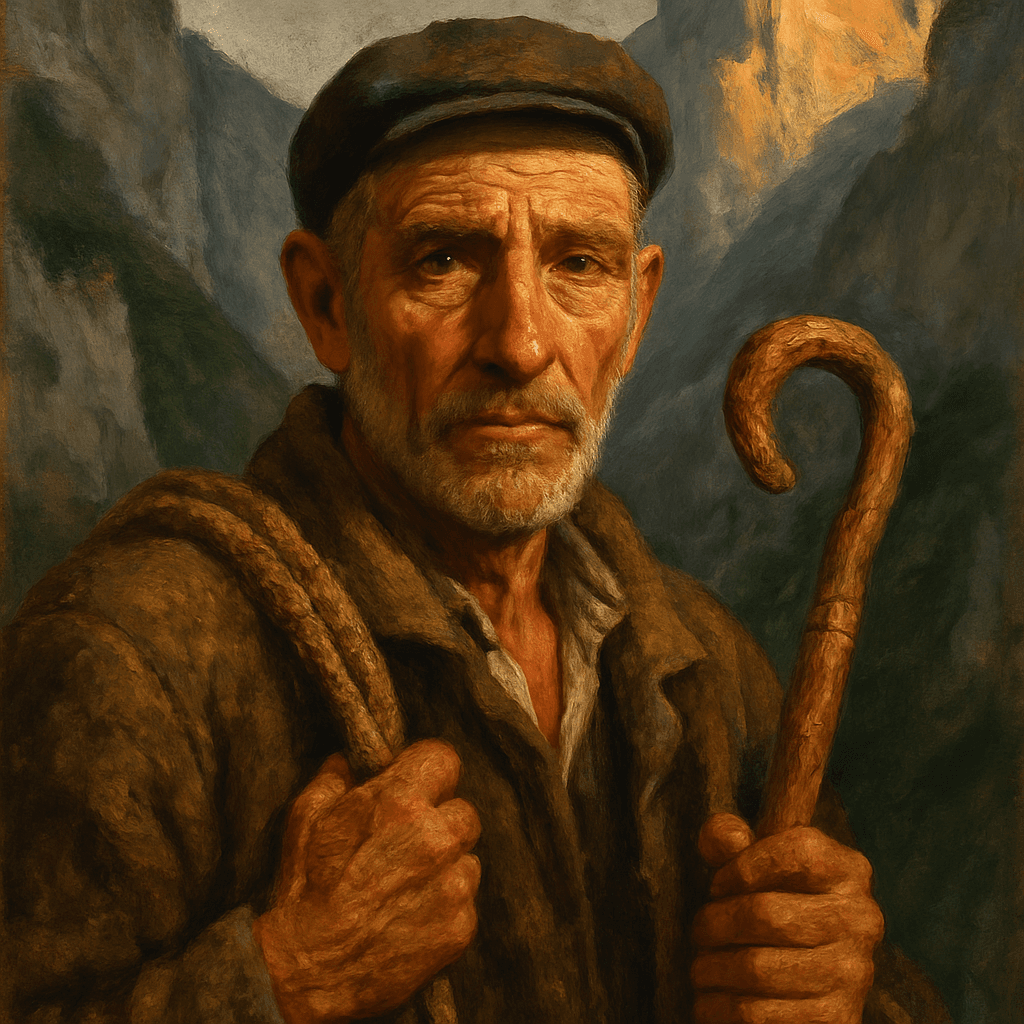
Gregorio Pérez, 'El Cainejo'
c.1853–1913 · a real person
A lean old goat-herd, plain-spoken, slow to praise, with a hunter's eye for weather and footing and a sly affection for anyone who keeps up.
Gregorio Pérez, 'El Cainejo'
I am Gregorio Pérez, of Caín — they called me El Cainejo, and it was not always meant kindly. I went up the Naranjo de Bulnes in the summer of 1904 with a marqués on my rope, and I came home to my goats. Now I want to show you my gorge from end to end, because something happened here after I was under the ground, and I have never been able to walk it. You will be my legs. Keep to the wall side, drink when there is water, and do not let the noise of the river hurry you.
- Length
- 19.8 km
- Time
- 5 h 37
- Ascent
- 664 m
- Grade
- Hard
The walk
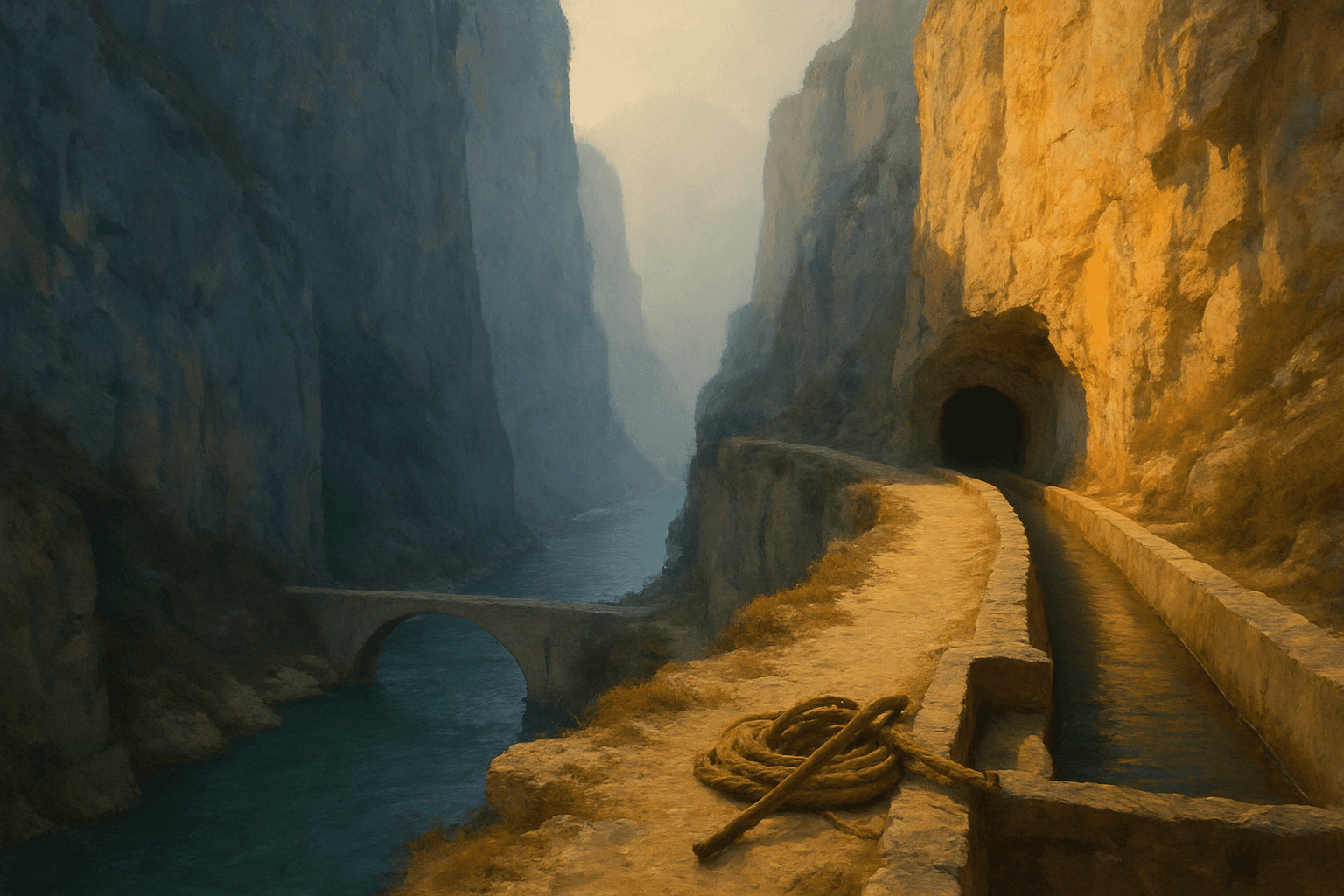
Twenty kilometres of cut rock, canal and air above the Cares river, told by Gregorio Pérez, 'El Cainejo', the goat-herd of Caín who guided the first ascent of the Naranjo de Bulnes in 1904. There are no puzzles here, only a voice: where the wolves were trapped, where the water was stolen, where the men hung on ropes to widen a ledge. You will pass dams, hermitages, chamois bridges and ruined huts, and end at Poncebos with the gorge behind you. Bring water, a hat, and time.
Start here
Camino del Bustio
Stand at the information panel at the start of the Cares route below Posada de Valdeón / Cordiñanes (43.15249, -4.92061), facing downstream with the river on your right.
Open in Google MapsYour mission
Walk the Cares from Valdeón to Poncebos and hear the gorge's story from the man who knew it first.
10 stops · 0 clues and 2 photo challenges
Where Gregorio Pérez takes you
- 1
Presa de Cordiñanes
A small dam below Cordiñanes where the Cares is first put to work on its way north.
- 2
Mirador del Tombo
The classic balcony over the upper Cares gorge, with its monument to the mountain's own animal.
- 3
Ermita Corona
“Ermita de Corona”
A small Catholic hermitage above Posada de Valdeón, tied by legend to Pelayo and the beginning of the Reconquista.
- 4
Presa de Caín
The dam at Caín that feeds the canal running the length of the gorge to the power station at Poncebos.
- 5
Los Rebecos Bridge
“Puente de los Rebecos”
A slender bridge over the Cares named for the chamois, beside the great cave mouth of La Cuevona.
- 6
Cabaña La Sota
The ruin of a stone herder's hut at La Sota, right beside the path deep in the gorge.
- 7
Majada de Culiembro
A high shepherds' summer settlement where the gorge path meets the old tracks climbing to the peaks.
- 8
Cueva Armada
Ruins at a rock shelter above the path, used as shelter by those who worked the gorge.
- 9
Senda del Cares: Abriendo nuevos caminos
“Abriendo Nuevos Caminos”
An interpretive panel at the Collado de Pregüeles telling how new ways were opened through the Cares gorge.
- 10
Ruta del Cares
“Poncebos: the End of the Cares”
The northern trailhead at Poncebos, where the gorge opens out and the walk ends.
Who was Gregorio Pérez?
He was born and herded goats in Caín, halfway along this gorge, and knew the Cares walls as hunting ground long before a path was cut through them.
c.1853–1913
Gregorio Pérez Demaría, known as 'El Cainejo', was a shepherd and chamois hunter from the village of Caín in the Valdeón valley, deep in the Picos de Europa. On 5 August 1904 he reached the summit of the Naranjo de Bulnes (Picu Urriellu) together with Pedro Pidal, Marqués de Villaviciosa — the first recorded ascent of the peak. He spent his life moving goats, hunting rebecos and crossing the Cares gorge by the old winter tracks that linked Caín with Poncebos. He died in 1913, before the canal and the walkway that now carry thousands of visitors through his gorge were built.
Gregorio Pérez's words in this game are an AI performance written from the historical record; the facts above are documented.
Reviews
No reviews yet — finish the walk to leave the first.