City walk · Sydney, New South Wales · Australia
Tom Feeney, rat-catcher
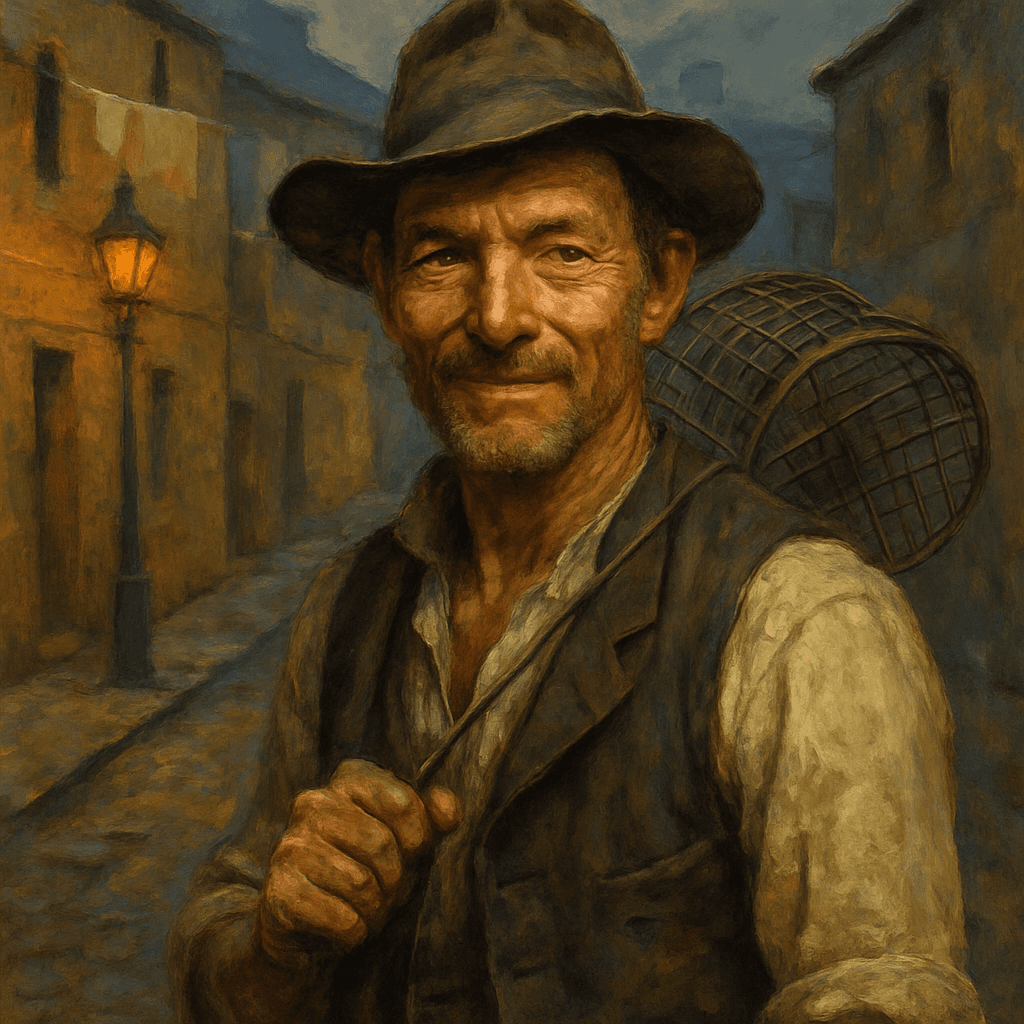
A 1900 plague-year rat-catcher, paid tuppence a tail; dry, quick, knows every lane and who owes him money.
Tom Feeney, rat-catcher
Name's Feeney. In the plague year of 1900 the government paid me tuppence a rat, and I caught more of them in these lanes than any man alive. Now they mean to pull the whole place down and I've hidden something in the stones that says what this place is called by the people who built it. Eight marks. One at every stop. Walk it with me and you'll read it — but you'll have to look, not listen.
The walk
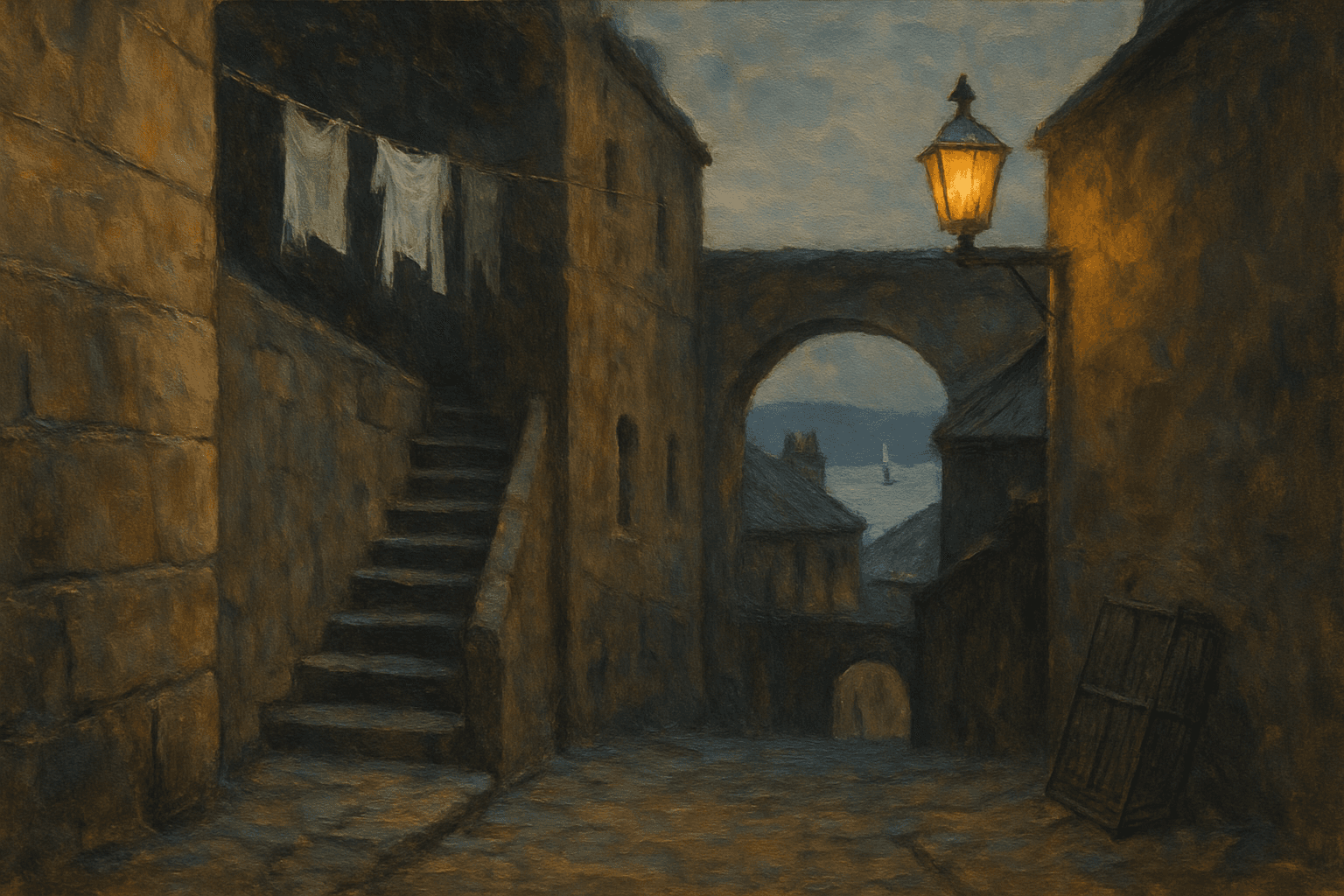
The Rocks was built by convicts on a sandstone spur with no plan at all — lanes follow goat tracks, stairs appear where streets should be, and half of it was nearly bulldozed in the 1970s. This game uses that confusion. Each clue is hidden in something you can only see by standing there. Solve it, hear the story, move on.
Start here
Circular Quay West, The Rocks
Start outside Cadmans Cottage, 110 George Street, on the Circular Quay side of The Rocks.
Open in Google MapsYour mission
Read the eight marks Feeney carved and say what this place is called.
8 stops · 7 clues and 1 photo challenge · a final puzzle
Where Tom Feeney takes you
- 1
Cadman's Cottage
Sydney's oldest surviving house, a small sandstone cottage once on the shoreline, home to Government Coxswain John Cadman and his wife Elizabeth.
- 2
Suez Canal
A lane so narrow both walls are touchable, once a rainwater sluice and the turf of the larrikin Rocks Push.
- 3
Susannah Place
A Gloucester Street brick terrace of 1844, built by Irish immigrants, lived in for 150 years and now a deliberately unrestored museum.
- 4
Foundation Park
A hidden park among wall footprints of eight 1870s terraces, saved when Green Ban unionists refused to clear The Rocks.
- 5
The Argyle Cut
A deep cutting where convict chain gangs hammered through the ridge in irons, later finished by the council with explosives.
- 6
The Garrison Church
Australia's first military church, on the corner of Argyle and Lower Fort Street, where redcoats marched from the Dawes Point battery from 1840.
- 7
Sydney Observatory
On the old town's highest point, a copper-domed building with a time ball; the hill earlier held Fort Phillip and a windmill.
- 8
Dawes Point
The point beneath the bridge's southern pylon, named for a First Fleet marine who recorded the Sydney language with Patyegarang.
Reviews
No reviews yet — finish the walk to leave the first.